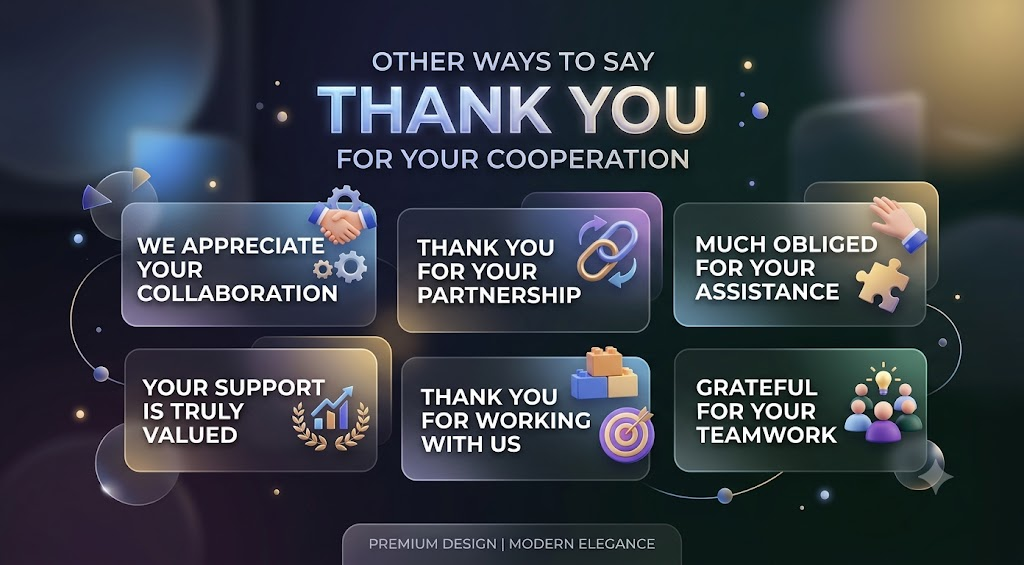

Showing appreciation is an important part of professional and personal communication. While “thank you for your cooperation” is polite, repeating the same phrase can make your emails, messages, or conversations feel repetitive. Learning Other Ways To Say Thank You For Your Cooperation helps you sound more genuine, respectful, and engaging in every situation. Whether you are communicating with clients, coworkers, teachers, or friends, choosing the right words strengthens relationships and leaves a positive impression.
Using different expressions also allows you to match the tone of your message. Some situations require a formal response, while others call for a friendly and warm approach. In this guide, you’ll discover meaningful alternatives, examples, and practical tips to help you express gratitude naturally and confidently.
Why It Is Important to Express Gratitude
Expressing gratitude builds trust and encourages positive communication. When people feel appreciated, they are more willing to collaborate and support future requests. A simple thank-you can make professional relationships stronger and more productive.
Showing appreciation also reflects professionalism and emotional intelligence. Whether you’re writing an email, responding to a customer, or thanking a colleague, using thoughtful language demonstrates respect for the other person’s time, patience, and effort.
When to Use Other Ways To Say Thank You For Your Cooperation
There are many situations where alternative expressions are more appropriate than the traditional phrase. Business emails, customer service replies, school communications, and workplace messages often benefit from more personalized wording.
Using different expressions helps your communication feel sincere instead of automated. It also allows you to adapt your message based on whether the situation is formal, casual, urgent, or appreciative.
Professional Alternatives
Professional settings often require respectful yet polished language. Here are several excellent alternatives you can use in business communication whenever you want to thank someone for their assistance or patience.
You can say “We appreciate your support,” “Thank you for your assistance,” “Your collaboration is greatly appreciated,” or “Thank you for helping us achieve this goal.” These phrases sound professional while maintaining warmth and respect.
Friendly Alternatives
Sometimes your message doesn’t need to sound overly formal. Friendly alternatives create a warmer tone and help build stronger personal or workplace relationships without sacrificing professionalism.
Examples include “Thanks for working with us,” “We truly appreciate your help,” “Thanks for being so understanding,” and “We couldn’t have done it without you.” These phrases make your gratitude feel more personal and genuine.
Formal Alternatives
Certain situations require a more official tone, especially when communicating with executives, clients, government offices, or academic institutions. Formal wording demonstrates courtesy and professionalism.
Good examples include “We sincerely appreciate your cooperation,” “Your continued support is greatly valued,” “Please accept our heartfelt appreciation,” and “Thank you for your valuable collaboration throughout this process.”
Casual Alternatives
When speaking with coworkers, friends, or familiar clients, casual expressions often feel more natural. They help conversations remain relaxed while still expressing sincere appreciation.
You might say “Thanks a lot for your help,” “Really appreciate everything,” “Thanks for sticking with us,” or “You’re amazing for helping out.” These responses sound authentic and approachable.
Alternatives for Customer Service
Customer service representatives regularly thank customers for their patience and understanding. Using different expressions prevents repetitive communication while maintaining professionalism and courtesy.
Try phrases like “We appreciate your patience,” “Thank you for your understanding,” “We value your continued support,” or “Thank you for giving us the opportunity to assist you.”
Alternatives for Workplace Emails
Email communication benefits from varied language because recipients often receive many similar messages. Choosing fresh expressions keeps your writing engaging and thoughtful.
Examples include “Thank you for your prompt response,” “We appreciate your flexibility,” “Your assistance has been invaluable,” and “Thank you for your continued partnership throughout this project.”
Alternatives for Team Collaboration
Successful teamwork depends on recognizing everyone’s efforts. Thanking teammates encourages motivation, boosts morale, and creates a positive work environment where people enjoy collaborating.
Consider saying “Thank you for your dedication,” “Your teamwork made a difference,” “We appreciate everyone’s contributions,” or “Thank you for your commitment to this project.”
Alternatives for Clients
Clients appreciate personalized communication that acknowledges their trust and partnership. A thoughtful thank-you helps strengthen long-term business relationships and encourages customer loyalty.
Useful phrases include “We appreciate your business,” “Thank you for choosing us,” “Your partnership means a great deal,” and “We truly value your continued confidence in our services.”
Alternatives for Difficult Situations
Sometimes people cooperate during delays, changes, or unexpected challenges. In these situations, expressing sincere gratitude shows empathy and respect for their patience.
Appropriate responses include “Thank you for your patience during this process,” “We appreciate your flexibility,” “Your understanding has been incredibly helpful,” and “Thank you for staying with us.”
Email Examples
Professional emails become more effective when appreciation feels natural instead of repetitive. Replacing the standard phrase with meaningful alternatives improves the overall tone of your message.
For example, you might write, “We sincerely appreciate your support throughout this project. Your timely responses and cooperation have helped us complete the work successfully. Thank you once again.”
Common Mistakes to Avoid
Many people overuse the exact same appreciation phrase in every message. This repetition can make emails sound robotic and less sincere, especially in ongoing conversations.
Avoid using excessive compliments, writing overly long thank-you notes, or adding unnecessary formal language. Keep your appreciation clear, genuine, and appropriate for the situation.
Tips for Choosing the Right Alternative
Always consider your audience before selecting an expression of gratitude. A formal client email requires different wording than a casual message to a coworker or friend.
Think about the relationship, communication style, and purpose of your message. Choosing language that matches the situation helps your appreciation feel authentic and meaningful.
Best Short Alternatives
Sometimes a brief expression is all that’s needed. Short alternatives are ideal for quick emails, instant messages, customer support replies, and everyday workplace communication.
Examples include “Much appreciated,” “Thanks for your support,” “Many thanks,” “Thank you kindly,” “Greatly appreciated,” “Thanks again,” and “We appreciate everything you’ve done.”
Why Variety Improves Communication
Using different appreciation phrases keeps your communication fresh and engaging. People notice when messages feel personalized instead of copied from a standard template.
Variety also demonstrates stronger communication skills. Whether you’re writing professionally or personally, thoughtful wording helps you create better impressions and build stronger relationships over time.
Final Thoughts
Learning Other Ways To Say Thank You For Your Cooperation allows you to communicate appreciation with confidence, professionalism, and sincerity. Instead of relying on one familiar phrase, you can choose expressions that fit every audience and situation perfectly.
Whether you’re thanking customers, coworkers, managers, teachers, or friends, thoughtful alternatives make your gratitude more meaningful. By selecting the right words and matching the tone to the occasion, you’ll strengthen relationships, improve communication, and leave every conversation on a positive and respectful note.